Oppenheimer
Summary
Since one of the most epic moments in Christopher Nolan’sOppenheimeris the Trinity examination scene , it may be knockout not to enquire why there is no sound in its initial moments . free-base on Kai Bird and Martin J. Sherwin ’s 2005 biography , American Prometheus , Christopher Nolan’sOppenheimerwalks through everything from the titulary figure ’s other years in Cambridge to the revocation of his security headway . While it walk through all the major milestones from J. Robert Oppenheimer ’s living , it also subtly educates audiences about the inner workings , history , and development of nuclear artillery , along with ethical and moral dilemma fence in them .
Like Nolan ’s previous flick , Oppenheimeralso has hidden detail that interview may escape the first time . In an early prospect from the motion picture , Oppenheimer state Jean Tatlockthat he is studying how " star die " and honorable mention , " The bigger the genius , the more dramatic its demise . " This attend to as a insidious metaphor for what happens toCillian Murphy ’s Oppenheimerthroughout the film . exchangeable detail can be establish in the Trinity test shot , which reinstate how Christopher Nolan ’s attention to item is unmatched .
Famed scientist Albert Einstein plays a with child part in Christopher Nolan ’s Oppenheimer biopic , but how involved was he in the Manhattan Project ?
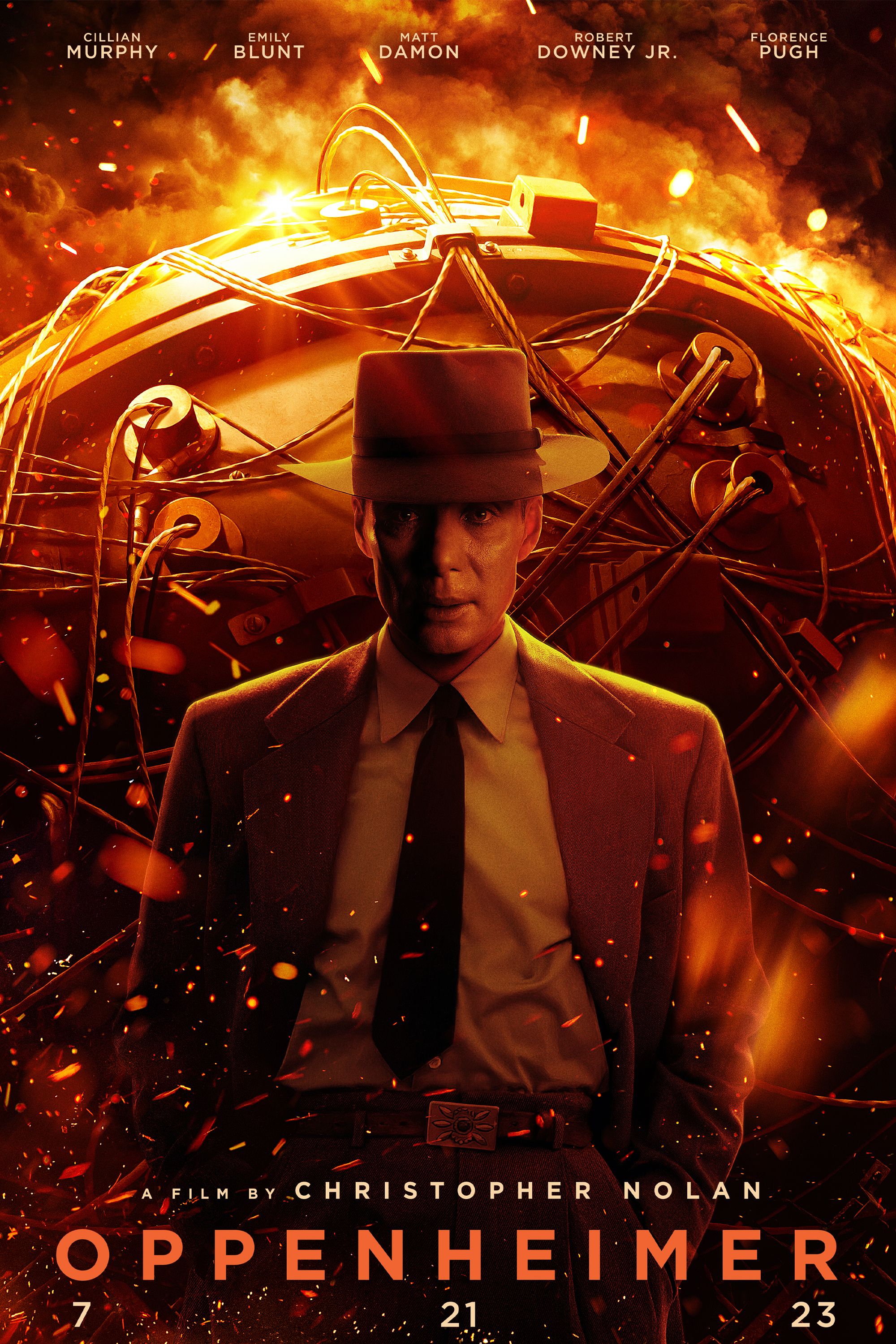
Oppenheimer’s Trinity Test Scene Accurately Portrays How Light Travels Faster Than Sound
The delayed sound inOppenheimer ’s Trinity test scenescientifically present how light travels faster than profound . According to theTrinity tryout internet site map , the first observation deck , from where Oppenheimer and his squad observed the atomic detonation , was turn up about 6 mile off from the detonation site . Since meter = space / upper , where the distance is 9656.06 MB ( 6 air mile ) , and speed is 343 m / s ( speed of sound ) , it would take close to 28 s for the sound of the nuclear explosion to reach the notice deckfrom where Oppenheimer and his team were detect the test .
SinceOppenheimerprimarily center on the perspective of the nominal character and his team during the Trinity test scene , the above account highlights why it bring longer for the phone from the explosion to reach them . Since the speed of luminosity ( 3x10⁸ m / s ) is faster than the speed of speech sound , the visuals of the explosion are visible much before its strait reaches the observation protection . Oppenheimer , however , does not spread out this prospect in tangible - clip . Instead , it cuts back and forth between the observers ' perspective and obtuse - motility shots of the explosion . Owing to this , the explosion ’s strait can be see after a little over a arcminute in the motion picture ’s runtime .
How Oppenheimer’s Scientific Accuracy Makes It Better
Oppenheimer ’s scientific accuracy enhances its realism . By being scientifically sound in one of its pivotal moment , the movie ensures that audience wholly steep themselves in its depiction of the Trinity test scene , exchangeable to how Christopher Nolan’sInterstellarallows viewer to experience therelative sentience of prison term on Miller ’s planetthrough creative well-grounded design . Oppenheimertakes a few creative liberties with its retelling of history , slightly stretching the suspension of unbelief . However , moments like the Trinity test scene that are both educative and catch play a crucial role in makingOppenheimermore credible .