Star Trek: Voyager
Summary
Star Trek : Discoverycreator Bryan Fuller says"anti - serialization"was a weakness ofStar Trek : Voyager , specially compared to its precursor , Star Trek : Deep Space Nine . DS9wove a racy tapis of story about the Dominion War , centering the moral dilemma inherent to hold Federation ideals at a time of political uplift and discord , which necessitated a serialized data format so as to be effective . Star Trek : Voyager , by contrast , seldom loiter in one part of space during its homeward quest , andVoyager ’s earlier account reflected that unbendable step forward by defend its characterization from week to week .
Bryan Fuller was a writer onStar Trek : Voyagerbefore creatingStar Trek : Discovery , which relies on modern serialized storytelling methods in its ambitious season - recollective arcs and is richer for recognizing its characters ' evolutions . InThe Fifty - Year Mission : The Next 25 Years by Mark A. Altman and Edward Gross , Fuller explains how thelack of serialization inStar Trek : Voyagerstifled the development of its characters , ultimately also hinder the writing process as storylines had to be abandoned in favour of constant advancing motion . Read Fuller ’s quote below :
The strong suit of DS9 was its serialization . Its power to say this is an on-going story and we have to see our character germinate and change and develop . On Voyager , I remember we had an episode where B’Elanna Torres had kind of a spiritual reawakening and it was pass away to be a huge deal that this person , who was basically a recovering Catholic , had turned her back on the Church and had no interest in being a part of it any longer , then has this fantastic experience where she sees the afterlife . She has a religious Three Kings' Day . To me , that was something so fascinating for this character to go through , because she is essentially having a confirmation of things that she had antecedently deny to herself and to everyone who would listen . Now she has to deal with religion becoming fact in her heart . But the storyline was just dropped . It was , like , here we have a character who can rediscover things and yet it was “ No , you ’re holding on to storylines from previous episodes and we have to move forward . ” The failing of Voyager in its anti - serialisation was the strength of DS9 . And when Voyager did embrace its serialized nature or a serialized nature it was more rich in its storytelling for it . It really was seeing a very early passage from a syndicate model into what is now more representative of a modern cable model .
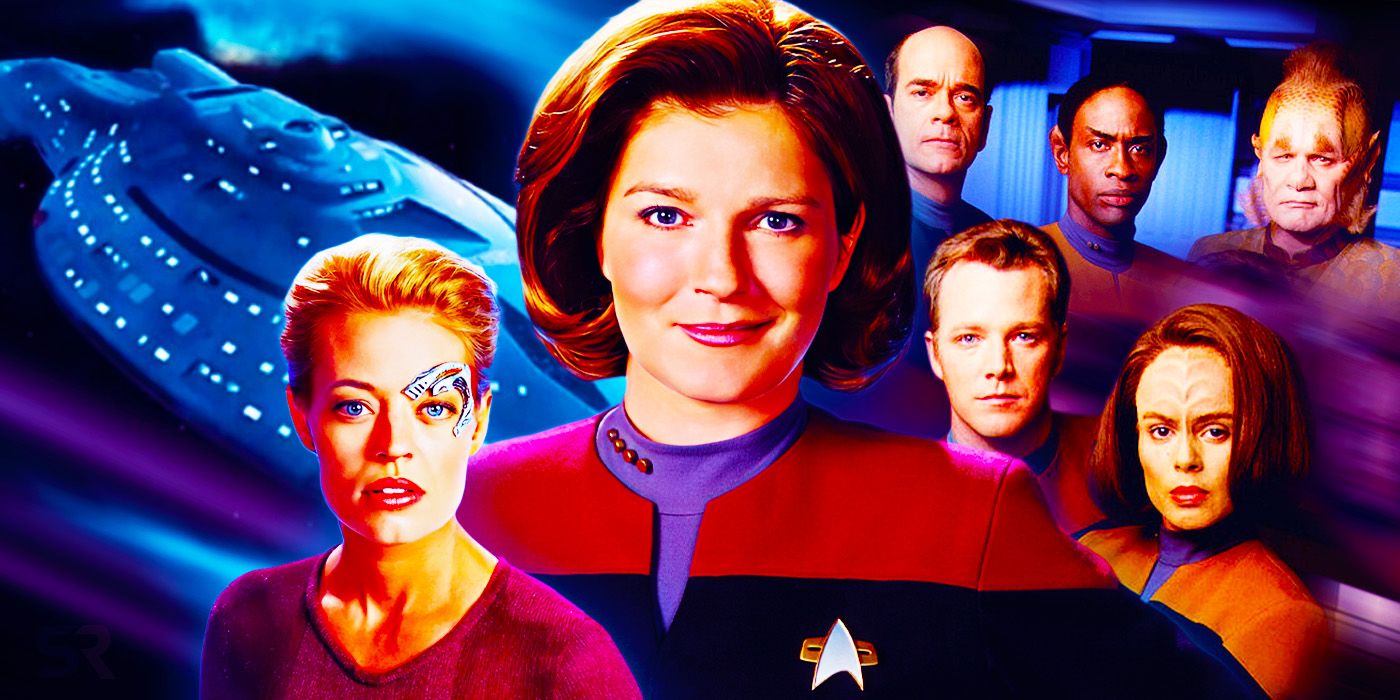
Star Trek : Voyager ’s 20 unspoilt episodes get out the best in Captain Kathryn Janeway , Seven of Nine , and the USS Voyager in the far - off Delta Quadrant .
Star Trek: Voyager Improved When it Embraced Serialization
Seven of Nine’s Necessary Character Arc Jump Started Others
Star Trek : Voyager ’s early endeavor at serialisation were sporadic at better , butVoyagerimproved when it allow its characters to be affect by their circumstances instead of keeping them stagnant . Voyager ’s assorted Maquis and Starfleet crewshould have been the source of more discord , but that panorama of its concept was quickly dropped , leaving only the discovery of Seska ( Martha Hackett ) as a Cardassian traitor as its lonesome ongoing plot line early on . After Seska ’s leaving , Voyager hurried along its course to the Alpha Quadrant withcharacters that usually reset to their base models after undivided episode revelations , as Fuller describes .
Star Trek : Voyageris cyclosis on Paramount+ .
Source : The Fifty - Year Mission : The Next 25 Years : From The Next Generation to J. J. Abrams : The all over , Uncensored , and Unauthorized Oral History of Star Trekby Mark A. Altman and Edward Gross